


Key takeaways
- Fragmented data makes performance hard to see. Standardized reporting gives commercial teams one view of which partnerships, offers and markets are performing.
- Reporting creates consistency; analytics makes it actionable. Together they turn lifecycle data into a standardized view commercial teams can use to make decisions.
- Better data means better investment decisions. Teams can spot underperformance earlier, optimize offers and campaigns, and expand into new markets based on evidence rather than intuition.
- Data turns bundling into a growth engine. Centralized reporting helps teams prove ROI, back the right partnerships and focus investment where it will create the most value.
The reporting problem that comes with scaling bundling partnerships
A subscription provider with one or two bundling partnerships can track performance manually. A spreadsheet, a monthly call with the partner, and a reconciled revenue figure at the end of the month is enough to get by. It’s time-consuming, but it works.
At five partners, that model starts to buckle. At ten or twenty, it breaks. The first problem is data consistency. Reporting has to establish a shared set of facts, including how many subscribers are entitled, how many have activated, and how many have cancelled. The partner, the subscription provider, and Boku all hold matching counts for those lifecycle events. When the numbers don’t line up, reconciliation produces discrepancies that take real work to resolve. Now multiply that across partners that each report in a different format, on a different cadence.
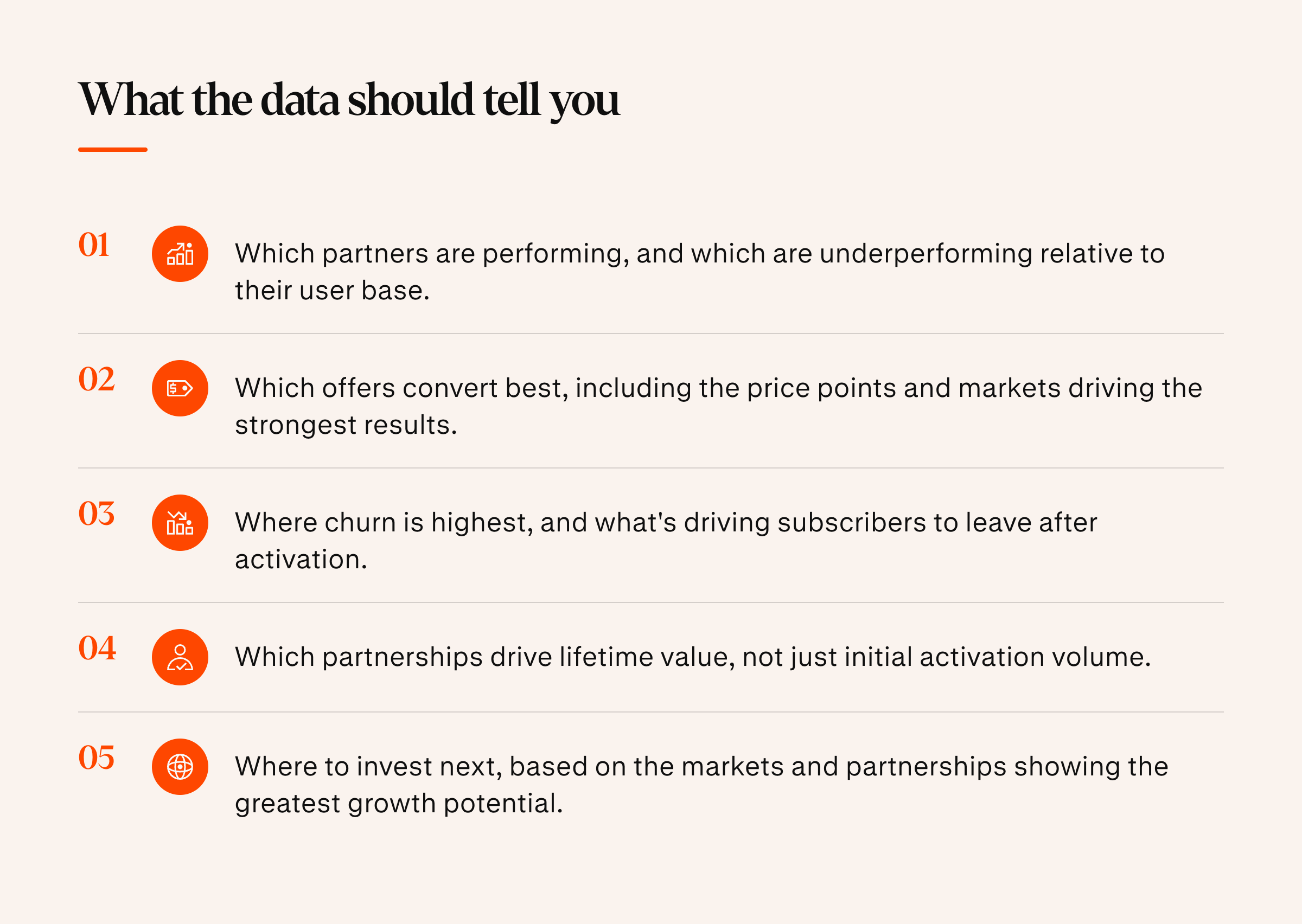
Once the underlying data is consistent, the harder commercial questions become answerable. Which partners are driving the highest lifetime value subscribers? Which offers are converting best in which markets? Where is churn highest, and is it the offer, the partner, or the market? Without a standardized foundation, these take manual effort to answer, and the answers arrive late or incomplete, which is exactly when commercial teams fall back on intuition.
What centralized reporting actually needs to show
Most subscription providers running bundling programs already have some data. The problem is that it arrives late, in inconsistent formats, at a level of aggregation that’s hard to act on. This is where reporting and analytics do different jobs. Reporting keeps the underlying lifecycle data consistent across partners. Analytics turns that data into a single, standardized view a commercial team can actually use to make decisions.
Boku provides that analytics layer as a consolidated view across every partner integration, delivered through pre-built Tableau dashboards rather than something each team builds from scratch. That standardization is deliberate. Without it, commercial teams are left deciphering partner reports that use different terminology and definitions; where a partner does define things differently, aligning that is an exercise with the partner rather than a problem the provider absorbs. This means the subscription provider can measure performance across the whole partner ecosystem in one place, on a consistent basis. The dashboards update on a daily, weekly, or monthly cadence with near real-time visibility, and act as a single source of truth for partnership performance. The analytics view is designed specifically for subscription providers.
Used well, that data helps commercial teams answer questions at three levels:
At the partner level: how is each partnership performing against the commercial targets set when the deal was agreed?
At the offer level: which bundle configurations, price points, and trial structures are driving activation and retention?
At the market level: where are the geographic or demographic patterns that show where to invest more and where to pull back?
For a Partnerships or Growth leader, that’s the difference between defending a decision with evidence and defending it with a story.
It also must follow the full subscription lifecycle, from acquisition to cancellation. A high trial-to-paid conversion rate matters. Once a subscriber becomes a paying customer, how long do they stay? Those questions can only be answered with data that tracks the subscriber from activation through to cancellation, standardized across every partner.
| ~90% average promotion-to-paid conversion across Boku’s bundled partnerships | ~60% average retention through Boku’s telco partnerships |
How standardized reporting changes commercial decision-making
Switching from fragmented to centralized data changes the commercial decisions that are possible. With fragmented data, choices about which partnerships to back, which offers to change, and which markets to enter rest mostly on intuition and negotiating position. With a standardized view, they can rest on evidence.
In practice, that means spotting underperforming partnerships early and acting before the commercial damage builds. It means pricing, promotional structures, and marketing campaigns can be shaped by what the performance data shows and applied to future offers, rather than agreed on instinct. It means the marketing and partnerships teams can plan campaigns around the partners and offers the data indicates are worth the investment. And it means the case for a new partner or market can be built on comparable data from existing partnerships, not projections alone.
In Boku-supported programs, the reporting layer becomes the primary source of truth for partnership performance. Offer changes guided by that analytics view can lift activations and entitlements, because the value comes from having the right data in the right format at the right time, not simply from having more of it.
It also changes what partnership and growth teams can demonstrate internally. Proving the ROI of a bundling program requires data that shows total recurring revenue alongside the relative performance of each partnership. Namely, which are worth the ongoing operational investment, and which are underperforming against what they need. That case is hard to make from fragmented partner reports, and it’s the case that earns these teams a seat at the table when leadership decides where to invest next.
From reporting to growth engine: using data to scale the right partnerships
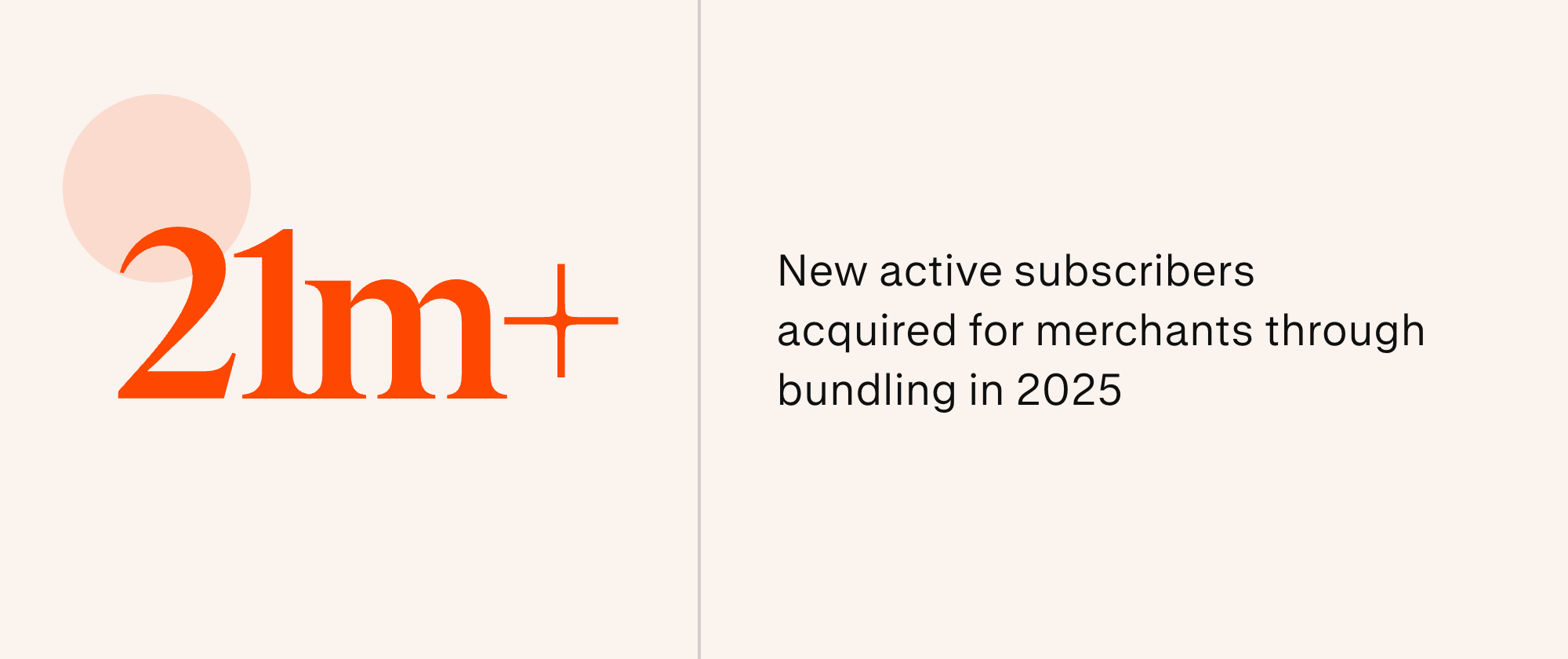
Subscription businesses getting the most from bundling treat it as more than a tactical distribution channel. They use performance data to actively manage their partnership portfolio, which is what elevates the channel into a growth engine.
That means using conversion and retention data to identify which partners are worth investing more in. Is it those offering deeper promotional commitments, more prominent placement, joint marketing campaigns, or offer configurations tailored to their user base? It means using the same data to see which partnerships are underperforming and deciding whether to improve them or redirect resources to higher-potential ones. And because the prize is a high volume of net-new subscribers who are likely to stay, it means judging partners not just on how many subscribers they bring, but on how well those subscribers retain.
It also means using data to guide market expansion. The providers that have scaled bundling most successfully used performance data from existing partnerships to find where commercial conditions were right, then launched there with evidence behind them.
The most commercially mature bundling programs share a common setup that comprises centralized reporting, standardized subscription lifecycle data, and the discipline to act on what the data shows. With Boku, the operational side of that is built in. The subscription provider connects once to Boku, and Boku provides a repeatable single connection to each new partner, so the portfolio can grow without the manual overhead scaling alongside it. The reporting and analytics layer is what gives commercial teams the evidence to manage those partnerships well.
That combination is what elevates subscription bundling from a distribution channel into a strategic growth engine, and it’s what Boku’s bundling platform is built to support. If you want to see what it looks like in practice, the bundling product page covers the full platform.
FAQs
Why is reporting so important in subscription bundling programs?
When bundling data is fragmented across partners, it’s hard to know which partnerships are performing, which offers are converting, and where to invest next. Reporting first keeps the underlying lifecycle data consistent across partners; standardized analytics then turns it into a comparable view. Together they let commercial teams replace intuition with evidence and build the ROI case for continued investment to leadership.
What does good subscription bundling reporting look like?
Good bundling reporting starts with consistent lifecycle data (matching entitlement, activation, and cancellation counts across the partner, the provider, and Boku). On top of that, a standardized analytics view works at three levels: partner (performance against agreed targets), offer (which configurations and price points drive activation and retention), and market (where to invest more). It should follow the full lifecycle and act as a single source of truth.
Do telco bundles improve subscriber lifetime value?
Telco bundles can improve subscriber lifetime value when the partnership is well-structured and actively managed. Average retention through Boku’s telco partnerships runs at around 60%, though it varies by offer structure, partner, and market. Retention also depends on the provider keeping the service valuable, for example refreshing content, so subscribers have a reason to stay. Centralized reporting helps identify which configurations drive higher lifetime value, telco and non-telco alike, so those learnings can be applied elsewhere.
How do subscription businesses use data to compare bundling with other distribution channels?
Providers with centralized reporting can more easily compare bundling against other acquisition channels on measures such as cost per acquired subscriber and retention. Revenue per subscriber is not surfaced directly in the reports, but consistent lifecycle data across every channel and partner makes it far easier to derive, giving a consistent basis for deciding where to invest for growth.
How does standardized reporting help subscription businesses scale their bundling programs?
Standardized reporting gives a portfolio-level evidence base: which partners to back, which offers to change, which markets to enter next. It also reduces risk, by showing which partnerships return proportional value before more is invested in them. The scaling benefit compounds when the connection model is repeatable, so adding partners grows the portfolio without a matching rise in manual reporting work.