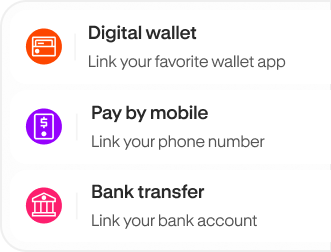
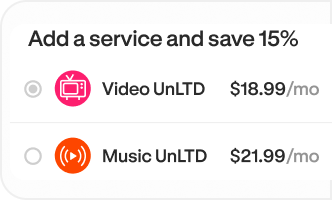


Subscription bundling is a distribution model where digital service providers partner with wallets, telcos, banks, retailers, and digital platforms to acquire and retain subscribers outside of app stores. The subscription businesses scaling fastest are running it as a dedicated growth channel, with repeatable operations, centralized reporting, and direct partner relationships they own and build over time.
Subscription providers can sell direct to consumers or reach them through a partner. Direct selling and app stores both have limits, which is why more providers are moving to partner-led distribution.
| Distribution model | How it works | What subscription providers gain | What they give up |
|---|---|---|---|
| App store distribution | The service is discovered, purchased, and managed through a major app store or platform. | Access to a large existing audience and familiar purchase flow. | Less control over customer relationship, commercial terms, payment flow, and partner strategy. |
| In-house partner integrations | The subscription provider builds and runs its own integration with each partner it signs. | Full ownership of partner selection and commercial terms. | Engineering and operations effort that grows with every partner added. |
| Reseller or marketplace model | A third party packages and distributes the subscription through its own partner or marketplace environment. | Faster access to partner channels with less direct integration effort. | Less direct influence over launch timing, offer configuration, reporting, and long-term relationship development. |
| Direct partner bundling | The subscription provider works directly with partners (mobile operators, broadband providers, banks, retailers, wallets, or utilities) to bundle the service into existing customer relationships. The provider keeps the partner relationships and the commercial terms in its own name. This is the model Boku’s platform is built for. | More control over partner selection, offer structure, customer experience, and future optimization. | Requires more operational coordination across integration, billing, reporting, and lifecycle management. |
The right model depends on the provider’s stage, resources, and growth priorities. But the important evolution is that subscription bundling has gone from being just another distribution option to becoming a repeatable growth channel.
What changed is how seriously subscription businesses are taking bundling
Subscription bundling has been part of the digital services ecosystem for years. Telcos have packaged third-party content into their plans since the early days of mobile data. Banks, retailers, and wallets have followed a similar pattern, and streaming platforms have run promotional trials through these partners for almost as long.
For most of that time, bundling was treated as opportunistic. It was a useful add-on when a partner deal came together, managed by a business development team with a long list of other priorities. A partnership launched, the outcomes were tracked loosely, and the model worked well enough for a single deal. But nobody was building infrastructure around it.
This approach is being replaced. Subscription businesses are increasingly running bundling as a structured growth function, with its own commercial strategy, operational processes and performance metrics. It’s a pattern that now runs across streaming, gaming, and digital services, education and e-learning, health and wellness, e-commerce and subscription boxes, as well as online communities, delivery services, and hardware and devices.
This transition reflects a commercial reality. Direct-to-consumer acquisition alone is getting harder to scale: digital channels are more crowded, and app store fees compress margins. Subscription fatigue is increasing churn at the same time, and expanding into new markets without local partners is costly and risky. Bundling puts the service in front of a partner’s existing customers, in the apps and websites they already use, backed by partners who understand local preferences and behavior. It gives providers a lower-risk way to test new markets and improve retention.
What subscription bundling means in practice:A digital service provider (for example, a streaming platform, gaming subscription, or e-learning service) partners with a distribution partner such as a telco, bank, retailer, or digital platform to offer their service to that partner’s customer base. The partner always handles end-customer billing, and usually manages customer-facing promotion too, either together with the subscription provider or on their own, depending on what’s agreed before launch. Subscription providers can also reach customers directly through their own sales, often as a first step to generating revenue. Bundling extends that reach: it gives the subscription provider access to a trusted customer relationship they couldn’t otherwise build through direct sales alone. In the strongest models, the subscription provider retains control over partner selection, offer structure, and how the relationship develops over time. |
Partner bundling and app store distribution work differently
App stores offer distribution at scale. They also come with a fixed cost structure (typically 15 to 30% of revenue) and a standardized environment where every service competes on the same terms, subject to the same platform policies.
Partner bundling works differently. Each commercial arrangement is negotiated directly between the subscription provider and the distribution partner. That means the provider can structure an offer suited to a specific audience in a specific market, with pricing, trial mechanics, and positioning that reflect the actual dynamics of that partnership.
When the subscription provider owns the partner relationship, it has more room to shape it over time. Both sides develop a clearer picture of what drives activation, retention, and lifetime value for their shared subscribers, and the commercial terms can be revisited as that understanding grows. That kind of ongoing development isn’t possible within an app store model.
| 50M+ active subscribers supported through partner bundling in 2026 |
What’s the difference between a single bundle and a bundling growth channel?
Running one partnership with one partner (a telco, bank, retailer, or digital platform) is a useful starting point. The shift happens once that single integration works and you’re ready to add more partners: a repeatable bundling growth channel needs very different commercial and operational commitments to a single bundle.
| Single bundle | Bundling growth channel | |
|---|---|---|
| Partner scope | One partner, often in one market or through one commercial relationship. | A portfolio of partnerships across telcos, banks, digital platforms, retailers, and other distribution partners. |
| Technical model | A bespoke integration built around the requirements of one partner. | A repeatable integration model that allows new partners to be launched without rebuilding from scratch each time. |
| Operational model | Managed by a small team with partner-specific processes. | Supported by consistent operational standards across activation, billing, lifecycle management, support, and reconciliation. |
| Commercial framework | Commercial terms, offer structure, and reporting are managed around the individual deal. | Shared commercial frameworks and reporting standards make performance easier to compare across partners and markets. |
| Scaling challenge | Complexity is contained because the partnership count is low. | Each additional partner introduces new technical environments, billing logic, lifecycle requirements, and market variables. |
| Growth potential | Useful for testing demand and proving the channel. | Designed to keep expanding once the model has been proven. |
The digital service providers that turn bundling into a reliable growth channel are doing more than just adding partners. They are solving a repeatability problem.
What a mature bundling program requires:A repeatable integration model: so each new partner doesn’t require a full custom build from scratch One consistent integration: however each partner runs their own subscription lifecycle, Boku absorbs the difference. The subscription provider builds once and reuses the same integration for every partner it adds. Centralized performance data: to understand what’s working before committing further investment Operational resilience: so partner incidents and lifecycle exceptions don’t cascade into subscriber experience failures |
The commercial case for investing in bundling infrastructure now
The subscription businesses that are building bundling capability are typically doing so for one of a few reasons:
- Direct-to-consumer growth is plateauing.
- App store dependency has become a commercial risk.
- Previous attempts at partner distribution stalled because each new partnership required a custom integration, a new commercial agreement, and a separate operational process.
The cumulative overhead made scaling impractical. The subscription teams that have moved past those limitations stopped treating each partnership as a standalone, custom-build project and started running many partnerships through one repeatable model.
Boku’s platform data reflects the difference this makes. Across our customers, average promotion-to-paid conversion across bundled partnerships runs at approximately 90%, while average retention sits at around 60%.
These outcomes help explain why subscription providers are treating bundling as more than an acquisition experiment.
The rest of this series covers how to build that model. From the integration and operational foundations required to scale beyond a handful of partners to the commercial case for owning partner relationships directly, not distributing through a reseller. It goes on to cover the reporting that shows which partners are worth more investment.
This is the commercial context behind Boku’s bundling education series. It’s about helping subscription providers move from isolated partner launches to repeatable partner-led growth.
If you want to start with a more foundational overview of how subscription bundling works, our introductory post covers the basics. [Link: boku.com/blog/what-is-bundling]