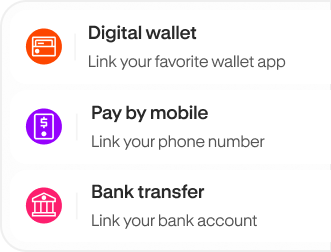

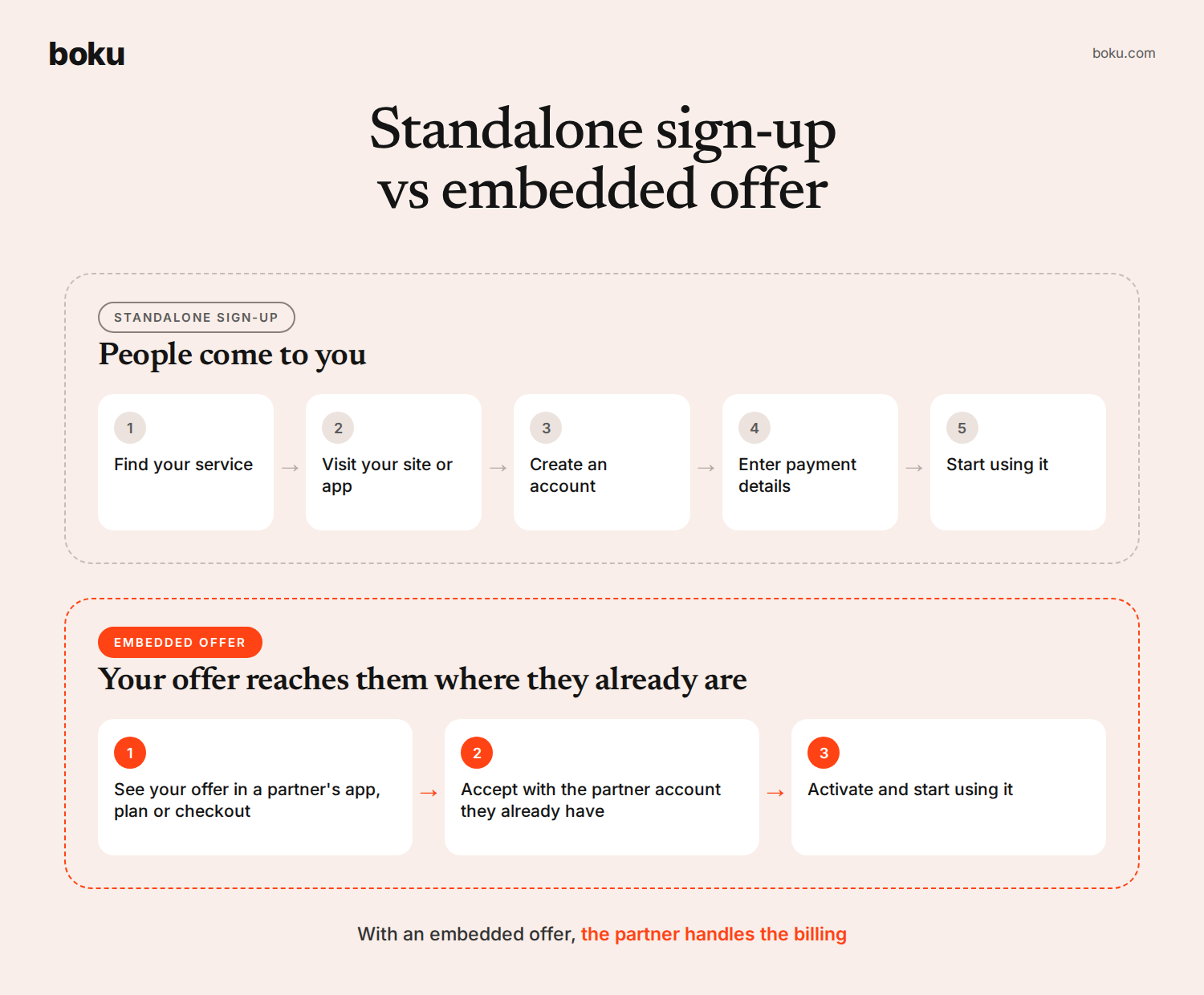
Embedded distribution is when your subscription is offered inside another company’s product, at a point in a journey its customers are already taking, such as choosing a phone plan, using a banking app or checking out at a retailer. They accept the offer through the account they already have with the partner, and the partner handles the billing.Embedded distribution puts your subscription inside journeys people already takeThe familiar way to win a subscriber is a standalone sign-up. Someone finds your service, visits your site or app, creates an account, enters their payment details and starts using it. More steps create more chances for people to drop out. Baymard Institute found that 17% of US shoppers who abandoned a checkout said the process was too long or complicated. Embedded distribution shortens this journey. Here, when someone opens their banking app or sees your offer when choosing a new phone plan, they accept it with the account they already have. The partner handles the billing. The customer still activates your service (often by setting up a login), but they don’t have to find you first or enter new payment details.
|
Subscription bundling shows embedded distribution in use at scale
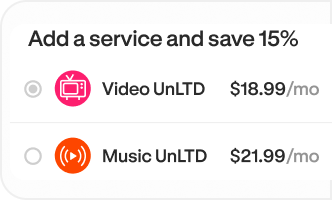
Subscription bundling is a form of embedded distribution and part of a wider trend known as embedded commerce, where purchases are made inside the apps and services people already use. Put simply, a partner, such as a telco, bank, digital wallet or retailer, offers your subscription to its own customers.
Among US streaming subscribers, bundles are becoming more common, with Deloitte’s 2026 research on streaming bundles revealing that 50% of respondents said at least one of their paid services was part of a bundle, up from 44% a year earlier. Deloitte also notes that some streaming providers have begun forming partnerships beyond media, through subscription bundles and membership perks.
Partners have their own reasons to offer them as well. Looking at telco bundling, Omdia argues that adding third-party content helps telcos attract customers and keep them, while their customers get the convenience of buying several services together, often at a discount.
This gives subscription businesses a route to people who might never go through a standalone sign-up. (Bundling’s commercial weight shows in Boku’s own results too. Our bundling revenue grew 39% to $9.2 million in the first half of 2026 alone.)
Embedded distribution puts your subscription inside journeys people already takeThe familiar way to win a subscriber is a standalone sign-up. Someone finds your service, visits your site or app, creates an account, enters their payment details and starts using it. More steps create more chances for people to drop out. Baymard Institute found that 17% of US shoppers who abandoned a checkout said the process was too long or complicated. Embedded distribution shortens this journey. Here, when someone opens their banking app or sees your offer when choosing a new phone plan, they accept it with the account they already have. The partner handles the billing. The customer still activates your service (often by setting up a login), but they don’t have to find you first or enter new payment details. Subscription bundling shows embedded distribution in use at scaleSubscription bundling is a form of embedded distribution and part of a wider trend known as embedded commerce, where purchases are made inside the apps and services people already use. Put simply, a partner, such as a telco, bank, digital wallet or retailer, offers your subscription to its own customers. Among US streaming subscribers, bundles are becoming more common, with Deloitte’s 2026 research on streaming bundles revealing that 50% of respondents said at least one of their paid services was part of a bundle, up from 44% a year earlier. Deloitte also notes that some streaming providers have begun forming partnerships beyond media, through subscription bundles and membership perks. Partners have their own reasons to offer them as well. Looking at telco bundling, Omdia argues that adding third-party content helps telcos attract customers and keep them, while their customers get the convenience of buying several services together, often at a discount. This gives subscription businesses a route to people who might never go through a standalone sign-up. (Bundling’s commercial weight shows in Boku’s own results too. Our bundling revenue grew 39% to $9.2 million in the first half of 2026 alone.)
Embedded distribution changes four things, so plan them before launchMoving sign-up onto a partner’s platform changes how you sell. Each change is easier to agree before launch than after. Where the offer appears. It sits inside the partner’s product, so the partner shapes who sees it and when. Look for partners whose customers look like your subscribers, then agree where your offer appears in their journey (such as a plan upgrade or a new account). Our blog on the consumer purchase journey explains why this ‘moment’ matters. How the offer is built. It has to fit what the customer is doing at the time. It might be included in a plan, offered as a free trial or sold as an add-on, depending on what they pay for already. How you’re paid. The partner bills its customer and pays you under the terms you agree, which vary by partner. Agree on reporting at the same time, and track how many people accept the offer, activate it and stay, using the same measures for every partner. When your relationship with the customer starts. Sign-up happens with the partner, so activation (when someone sets up access and starts using your service) is your first direct contact with them. Keep this step as short as you can. Once your first embedded offer is live, the next one shouldn’t mean starting again. With Boku, one connection works across multiple partners, so later offers need less new technical work. Shared reporting and processes can make each later partner easier still, and our guide to partner ecosystems for subscription businesses explains how that works. Embedded distribution works alongside your standalone sign-upHowever many partners you add, the two journeys do different jobs. The standalone sign-up is well suited to people who are already looking for your service. An embedded offer can also reach people who aren’t actively looking, inside the apps and plans they already use. Every step of a standalone sign-up is a chance to lose someone. So the decision in front of you is which partner moments could bring your subscription to new people, with fewer steps between discovery and activation. |
FAQs
| What is embedded distribution? Embedded distribution is when another company offers your product inside its own app, plan or checkout, at a point in a journey its customers are already taking. For subscription businesses, that means people can sign up through a telco, a bank, a digital wallet or a retailer using the account they already have, with the partner handling the billing. What is embedded commerce? Embedded commerce is buying inside the apps and services people use every day, without going to a separate store or site. Embedded distribution is the seller’s side of it: getting your product offered in those places. For subscription businesses, that means a partner offering your subscription to its own customers. Is embedded distribution the same as subscription bundling? They’re closely linked. Subscription bundling is the arrangement: a partner offers your subscription to its own customers. Embedded distribution describes where the sale happens (inside the partner’s own product, such as its app or the plan a customer is choosing). Bundling is one form of it. Does embedded distribution replace standalone sign-ups? No. A standalone sign-up through your own site or app still suits people who are already looking for your service. Embedded distribution can add a route to people who aren’t looking, inside products they already use. Running both can help you reach more of your audience without depending on a single route. Who handles billing in embedded distribution? The partner does. Customers pay through the account they already have, such as a phone plan, a bank account, a wallet or a store account, and you’re paid under the terms you agree on. That’s why it helps to settle commercial terms and reporting before launch, so you can see how each partner performs. |
Key takeaways
|