

| When a bundling partner offers your subscription, the trust its customers have in that brand can work in your favor. People are more likely to take up your offer when they already have confidence in the partner, and when your service matches what they expect from it. |
Trust counts as much as price and quality when customers buy
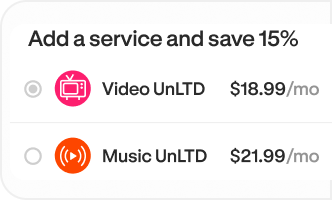
Picture a customer opening their mobile network’s app and spotting your subscription bundled into their plan. They don’t weigh up your subscription from scratch. They react to the brand offering it.
A big part of that reaction is trust. In its 2025 brand trust report, based on a survey of 15,000 people in 15 countries, Edelman found that ‘trust is as much of a purchase consideration as quality and price’.
But customers don’t trust a brand for everything. What they rely on a partner for affects whether they’ll have confidence in your offer too.
Consumer trust varies from one kind of organization to another
Consumer trust isn’t spread evenly. In a 2024 UK government survey, 68% of nearly 5,000 adults said they trusted banks and financial institutions to act in their best interest, while only 33% said the same of social media companies.
Trust is specific within a single brand too. Someone might trust their bank completely with their savings and still find it odd if the bank recommended a mobile game.
Brand trust carries over when your service makes sense coming from that partner
Marketing researchers have long studied partnerships between brands, often through co-branded products that carry two brand names. A 2021 analysis by Paydas Turan pooled 197 results from 37 studies, and found that the relationship between partner brands had a significantly bigger effect on whether a co-branded offer succeeded, than the characteristics of either brand on its own.
The type of fit that mattered most was brand image (or how well the two brands’ identities go together.)
A bundled subscription isn’t quite the same as a co-branded product, but it asks customers to make a similar judgment about whether your service belongs with the partner.
If it does, the customer’s trust in the partner brand is more likely to carry over to your offer.
Your partner’s brand shapes how customers see your service
A 2025 analysis by Voss, Mohan, Jung and Jiménez, which pooled studies of brand alliances, found that a partner brand has a measurable influence on how people see the brand it partners with.
Before approaching a potential bundling partner it’s important to look at whether their customers’ trust is likely to carry over to you, by considering your offer from their perspective.
Consider three questions:
- What do this partner’s customers rely on it for? (Staying connected, looking after their money for example?
- Is your service an easy next step from this, or a leap?
- Would its customers be surprised to see your service offered there?
If the answers point to an easy step, the offer is more likely to feel coherent coming from that partner. If it’s more of a leap, the partner isn’t ruled out, but your offer may need to explain itself a little harder.
Different services fit different partners. Our guide to subscription bundling examples goes through this fit category by category, and our blog on non-telco bundling partners covers the range of partners beyond telcos.
FAQs
What is bundling partner trust?
Bundling partner trust is the confidence customers already have in the brand that offers them your subscription. It describes how customers feel about your partner and it’s specific: people trust a bank with money and a mobile network with keeping them connected. Your offer benefits most when it fits what they already rely on that partner for.
What is brand trust?
Brand trust is people’s confidence that a brand will deliver what it promises and act in their interest. Edelman’s 2025 research found people weigh it as heavily as price and quality when they buy. It also tends to be specific: people trust a brand for particular things, which affects how they respond when it offers something new.
Does a partner have to be in the same category as your service?
No. Your service needs to be an easy next step from what customers already rely on the partner for, and that step can cross categories. A budgeting app is a different product from a bank account, but it sits naturally with a bank because both are about managing money. What matters is whether customers would find the offer surprising coming from that brand.
Can a highly trusted partner be the wrong choice?
Yes. Research on co-branding found that how well two brands go together matters more than how strong either brand is on its own. A partner that customers trust deeply can still be a poor fit if your service sits far from what they rely on it for. Your offer would then need to do more of the work to make sense to them.
Is bundling partner trust the same as partner reach?
No. Reach is how many customers a partner can put your offer in front of. Bundling partner trust is how those customers feel about the partner, and whether this carries over to your service. A partner with huge reach can still be a poor fit for your offer. Our guide to audience quality versus reach looks at that side of the decision.
Key takeaways
- Bundling partner trust is the confidence customers already have in your partner, and it’s specific to what they rely on that partner for.
- When a partner offers your subscription, how customers see that partner shapes how they see your service.
- Research on co-branding suggests how well two brands go together matters more than how strong either one is.
- Before approaching a partner, ask whether your service would make sense to its customers coming from that brand.