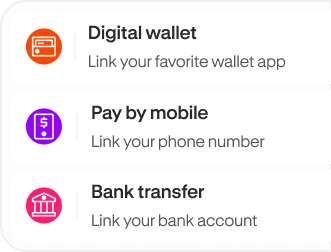
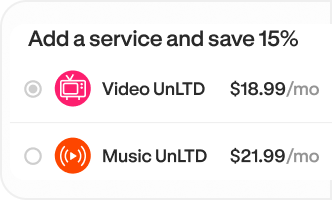



Partner-led growth means reaching subscribers through companies already serving them, such as mobile networks, banks and gyms. For subscription businesses in AI, fitness and digital utilities (everyday tools like cloud storage and password managers), partners can open a large audience through existing channels. Lasting growth depends on customers activating and staying, and on the partnership earning more than it costs.
Partner-led growth means different things at different stages
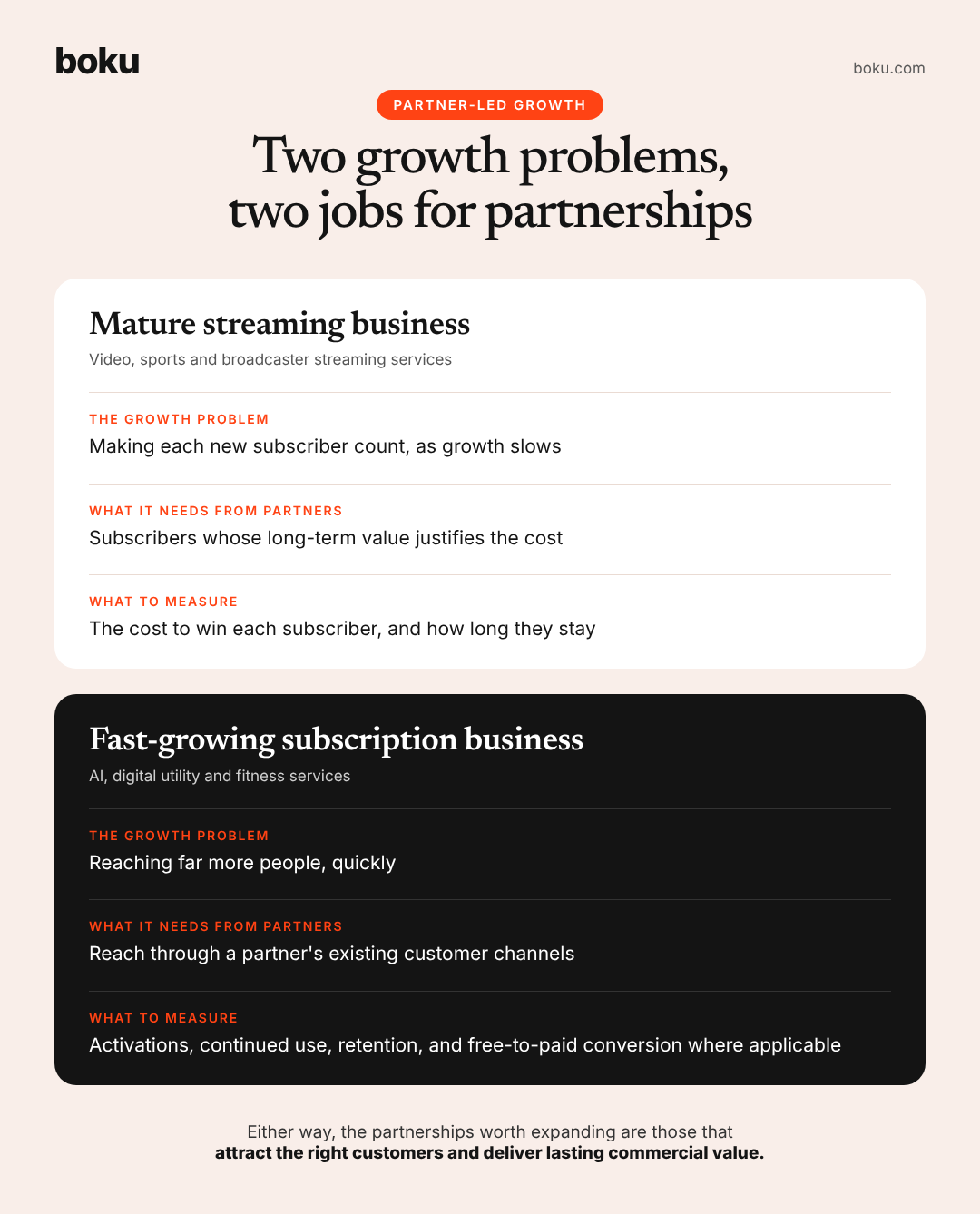
A streaming service that’s been around for a decade faces a different growth challenge from an AI app that has only recently found its audience.
The streaming service has to make each new subscriber count, because growth has slowed and every sign-up needs to pay back what it cost to win. The AI app has to reach far more people, and quickly. Both weigh reach against cost, in different proportions, and partner-led growth can serve either.
For fast-growing subscription businesses, partnerships provide a way to reach new customers beyond their own channels.That opportunity extends beyond AI to digital utilities, such as VPNs and cloud storage, and to fitness subscriptions.
Distribution partnerships reach customers through channels they already use
A fast-growing app can reach a point where its own channels struggle to keep up with its plans. Paid ads are quick to start and useful for testing which messages work, but they charge for clicks or views before you know who will subscribe, and every new audience means buying more of that attention.
A partnership opens a different route. The partner makes your offer available through its app, its bill or its membership. Our guide to subscription bundling vs paid acquisition compares how the costs of the two routes build up.
Partnerships have costs of their own, from revenue shares and fees that vary by partner to funding any free period, and access to a customer base doesn’t guarantee sign-ups. The offer still has to reach people who want the service. When it does, the reach can be substantial.
An AI partnership in India shows how far that reach can go
In July 2025, an AI search service made a free year of its paid plan available to the 360 million customers of India’s second-biggest mobile network, TechCrunch reported.
Downloads followed. Sensor Tower estimates, cited by TechCrunch, put them at 56 million while the offer was open to new users (seven months), more than nine times the previous seven months. Downloads of two other leading AI assistants held broadly steady after launch (Appfigures data, same report). So the offer, more than wider interest in AI, looks like the reason for the jump.
When the window to claim the offer closed, downloads fell by more than 90% over the next six months. Monthly active users, which had peaked at 22 million in October 2025, were nearly 14 million by July 2026. That’s smaller than the peak, but more than five times their average in the first half of 2025.
Taken together, the figures suggest the partnership gave the service a much larger audience. What remains unclear is how many of the users the offer brought in will become, and remain, paying subscribers. Sensor Tower estimates that in-app revenue from February to mid-August 2026 was about 60% higher than during the offer period, but because the free plans were set to renew unless people canceled, it can’t show how many people chose to pay.
The right partner gives its customers a reason to use your service
Reaching millions of people doesn’t matter much if they have no reason to use your service. That’s why choosing the right distribution partner is as important as the size of its customer base.
A VPN helps protect the privacy of internet traffic, so it sits naturally alongside the mobile plan that carries that traffic. A UK finance app began rolling out a mobile plan in December 2025, Tom’s Guide reported, and its plan page now lists a VPN subscription as included.
A fitness app suits a gym membership in a similar way. In August 2026, a gym chain in the UK and Ireland began including a fitness app subscription in its members’ plans, endurance.biz reported. Members keep access to its clubs and gain thousands of digital workouts for home or travel.
In both cases, the subscription extends something customers already pay the partner for. More pairings, category by category, are set out in our subscription bundling examples.
Partner-led growth pays when subscribers stay and the economics work
Relevance gets people to try the service. Commercial success depends on how many customers activate and keep using it, and whether the revenue the partnership generates (from the partner, from subscribers or both) justifies what it costs. For an AI service, that cost includes serving every active user, which our blog on bundling for AI subscription businesses covers.
Together, those measures show what kind of growth a partnership is producing. A burst of sign-ups followed by little use can point to a poor match, or to an offer people took mainly because it was free. A smaller partnership whose subscribers stay active, and keep generating revenue, can be the better long-term opportunity.
Free-to-paid conversion matters where a free period leads to subscribers paying you directly. Either way, compare each partnership with your other channels on those measures, including what it costs, before deciding where to put more effort.
Repeating a partnership that works brings new operational work
Once a partnership works, the natural next step is to expand it to additional partners, such as other mobile networks, banks or retailers, and in more markets. Each new partner can bring different technical requirements, processes for managing subscription access and reporting formats.
Boku’s bundling platform handles much of that through one integration across mobile network, bank and retailer partners, so adding a partner doesn’t mean rebuilding how your subscriptions work. It manages access as subscribers activate, suspend and cancel, and reports by market, partner and offer, so you can compare partnerships on the same measures. You decide which partners and markets to add, and in what order.
The platform already works at scale and from January to June 2026, it helped subscription businesses serve 51 million subscribers, up from 42 million a year earlier.
Know which partnerships are worth expanding
A fast-growing AI app may use partnerships to put its service in front of people its own marketing doesn’t yet reach. An established streaming service may use them to win subscribers whose long-term value justifies the cost.
Those are different goals, but both depend on what happens once an offer reaches people. They need to find the service relevant, start using it and keep using it. The partnership also needs to work on terms that make financial sense.
So how many customers activate and stay through each partner, and what each partnership earns, should decide which ones a business expands. A partner’s audience size matters less.
FAQ
What is partner-led growth?
It’s reaching new subscribers through companies that already serve them, such as mobile networks, banks, retailers or gyms. The partner makes your subscription available to its own customers, sometimes included in a plan or membership. It sits alongside your own marketing and paid acquisition, with costs and measures of its own.
Why would an AI app partner with a mobile network?
A mobile network can make an AI app available to a very large customer base through channels its customers already use. In 2025, an AI search service offered a free year through a network with 360 million customers in India, and its downloads rose more than ninefold while the offer was open.
Are distribution partnerships faster than paid acquisition?
They can open a large audience through one agreement, where paid ads buy reach one click or view at a time. Some customers won’t see or act on a partner’s offer, though, and partnerships carry their own costs. Whether they work out faster or better value depends on how many of the partner’s customers activate and stay, and what the partnership costs.
Which partners suit digital utility and fitness subscriptions?
Partners whose customers already have a reason to use the service. A VPN, which helps protect the privacy of internet traffic, can sit alongside a mobile plan. A fitness app can sit alongside a gym membership, giving members workouts they can use away from the club. In each case, the subscription extends something customers already pay for.
How do you know if a growth partnership is working?
Look past sign-ups. Track how many people activate and keep using the service and, where a free period leads to direct billing, how many go on to pay. Then compare the revenue the partnership generates with what it costs. Sign-ups followed by little use can point to a poor match, or to an offer people took because it was free.
Key takeaways
- Partner-led growth reaches subscribers through companies that already serve them, using channels their customers already use.
- A fast-growing subscription business can look to partners for reach; an established one can look for subscribers whose long-term value justifies the cost.
- Reach can be large, as one AI service’s mobile network offer in India showed, but the commercial test is how many people activate and stay, and whether the revenue covers the cost.
- The right partner gives its customers a reason to use your service, and the partnerships worth repeating are the ones whose subscribers stay.