


Subscriber lifetime value is the revenue a subscriber brings in over the whole time they stay with you. It grows when subscribers pay more each month or stay longer. Renewals that go through without interruption protect how long they stay, so how people pay shapes lifetime value long after the first sale.
Subscriber lifetime value builds up one renewal at a time
A subscriber has paid you every month for two years, but then their bank sends them a new card, the next renewal doesn’t go through, and their account lapses. Their subscriber lifetime value stops growing at that moment. The revenue you’d have kept earning from them ends with just one failed renewal.
Replacing a card can also mean updating the payment details behind every subscription it pays for. In June 2025, when Brazil launched automatic payments on Pix, its central bank’s instant payment system, the central bank’s president pointed to that inconvenience, saying that when a card is cloned, used in fraud or about to expire, “you have to change all your subscriptions”, Agência Brasil reported.
Subscriber lifetime value depends on what subscribers pay and how long they stay
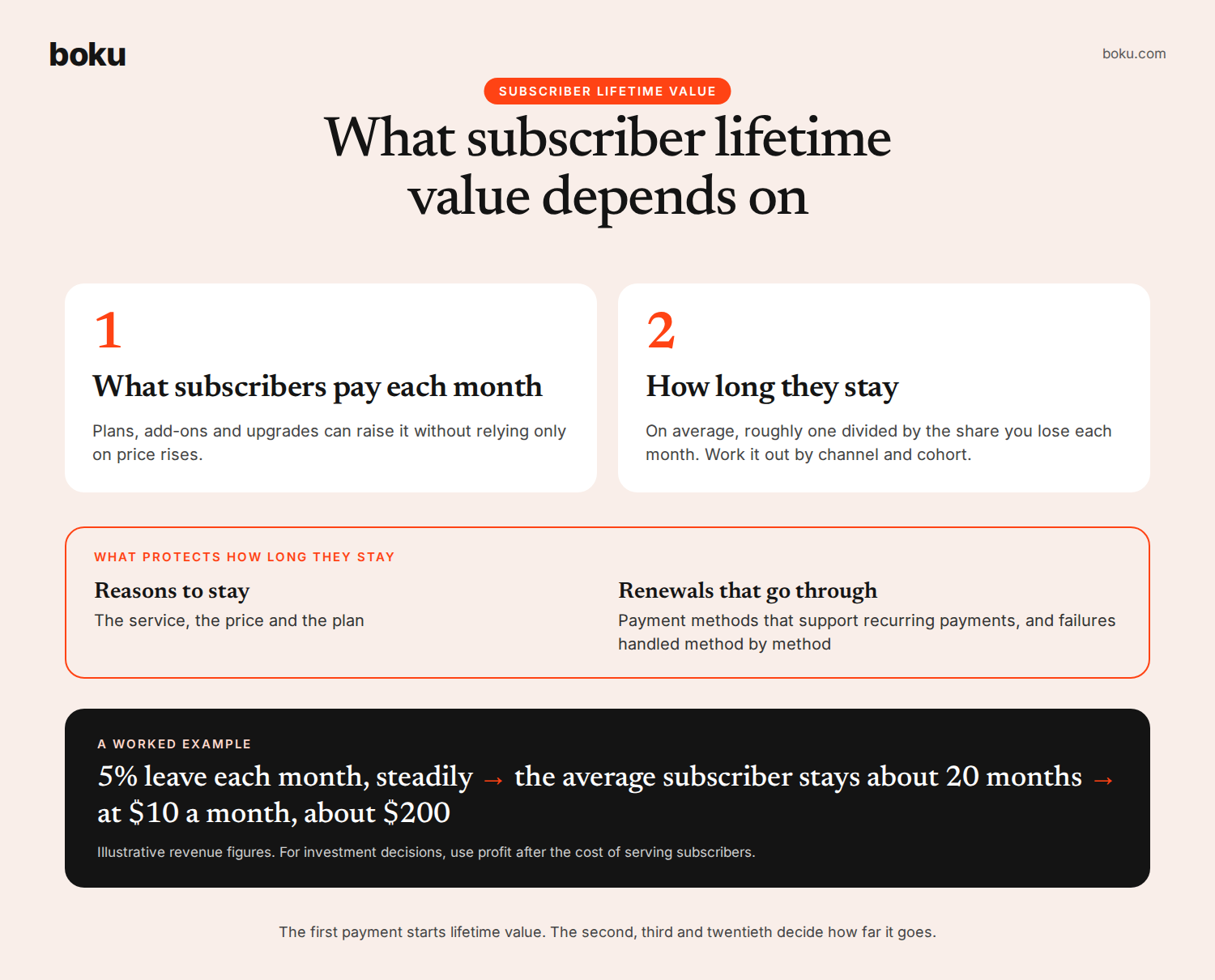
Lifetime value is what makes that lost renewal expensive. In its simplest form, it’s what a subscriber pays each month multiplied by how many months they stay.
If you lose a steady 5% of subscribers each month, the average one stays about 20 months, so at $10 a month they bring in about $200. That’s an average across subscribers, assuming the monthly rate holds, and isn’t a forecast for any one person.
For investment decisions, use a fuller version. The Marketing Accountability Standards Board bases customer lifetime value on the cash a relationship generates, allowing for the value of money over time, and treats it as an upper limit on what to spend winning new customers. $200 of revenue leaves less than $200 to cover acquisition cost once the cost of serving that subscriber comes off.
Lifetime value is more useful worked out by channel and cohort
An average across every subscriber hides the differences you can act on. Work out lifetime value for each acquisition channel and each cohort (a group of subscribers who joined at the same time) and set it against what each channel costs.
Analysts at Morgan Stanley’s Counterpoint Global point to the limitations of a simple ratio of lifetime value to acquisition cost, so treat it as a first view. Our guide to subscription bundling vs paid acquisition looks at how long each channel takes to pay back.
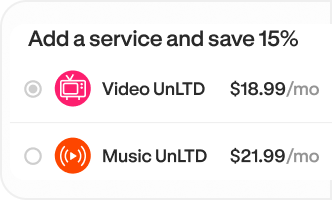
Our article on revenue growth beyond price increases covers raising what subscribers pay. Keeping them longer depends partly on payments and whether each renewal goes through.
Renewals that go through protect how long subscribers stay
Winning the first payment starts a subscriber’s lifetime value. The second, third and twentieth payments decide how far it goes.
Cards expire, get replaced and get declined, and some people don’t even have one. Other payment methods can fail too, for example when an account doesn’t have enough money in it, so renewals need handling method by method. Our guide to involuntary churn covers how to recover failed payments.
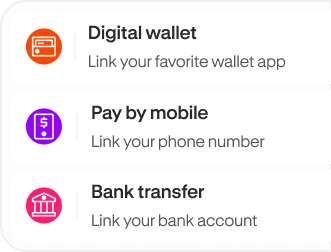
Boku connects subscription businesses to more than 200 local payment methods that support recurring payments, such as mobile wallets, payment through a phone bill and bank transfers. For methods that store a payment permission, Boku keeps that permission up to date to help prevent failed renewals.
How to increase customer lifetime value and protect every renewal
Go back to the subscriber who paid for two years and lapsed when their card was replaced. They hadn’t chosen to leave, and what they’d have gone on paying ended at a payment.
Measure it by channel and cohort, use profit when you weigh it against acquisition cost, and treat reliable renewals as part of keeping subscribers, alongside the reasons they stay.
FAQs
What is subscriber lifetime value?
It’s the revenue a subscriber brings in over the whole time they stay with you. For investment decisions, a fuller version uses the profit each subscriber generates after the cost of serving them and compares it with what it cost to win them. Either way, it shows what a subscriber is worth over time.
Is subscriber lifetime value the same as customer lifetime value?
Yes. Subscriber lifetime value is customer lifetime value applied to a subscription business, where revenue arrives in repeated payments. Using “subscriber” makes it clear that the value depends on each renewal, as well as on the first sale. The way you calculate it is the same.
How do you calculate customer lifetime value?
Multiply what a subscriber pays each month by how many months they stay. You can approximate the months by dividing one by the share of subscribers you lose each month, assuming that rate holds, so losing 5% a month suggests about 20 months. For investment decisions, use profit after the cost of serving subscribers.
How do you increase customer lifetime value?
Raise what subscribers pay, or keep them for longer. Keeping them longer means giving them reasons to stay and making sure their renewals go through. Measure lifetime value by acquisition channel and cohort first, so you can see where each approach matters most.
Why does payment method affect lifetime value?
Because every renewal is a payment that has to go through. Cards expire, get replaced or get declined, and some people prefer other ways to pay. Offering payment methods that support recurring payments, and handling failures for each one, can keep more renewals going through.
Key takeaways
- Subscriber lifetime value depends on what subscribers pay each month and how long they stay.
- Use a simple revenue estimate to understand it, and profit after the cost of serving subscribers when you weigh it against acquisition cost.
- Work it out by acquisition channel and cohort, since an average across every subscriber hides the differences you can act on.
- Renewals that go through protect how long subscribers stay, so treat how people pay as part of keeping them.