


Cross-selling through bundling partnerships means a partner sells your subscription to its customers as an optional paid extra. An included subscription makes customers eligible, while an add-on asks each one to buy, so its results depend on whether customers see it and judge it worth the price. Agree on the promotion in specific terms before launch.
A partner can include your subscription in a plan, or cross-sell it as an extra
A mobile network, a bank or a wallet wants your subscription in its offer. It can put it into a plan or account, so customers who have one are eligible to claim it, or sell it as an optional extra that customers choose to buy. Those are two different deals, with different revenue, different numbers to watch and different work for both sides.
Cross-selling through bundling partnerships is the second type – the partner sells your subscription to customers it already serves. One UK mobile network shows both types side by side. Its help pages describe a streaming service available as an extra included with a plan, as an add-on with a three-month free offer that’s then charged to the customer’s phone bill unless they cancel, or as a monthly subscription.
Included offers make customers eligible, and add-ons ask them to buy
With an included offer, eligibility comes from the plan. Your revenue arrives through the agreement with the partner, and the customer doesn’t buy your service separately. Take-up isn’t automatic, though, because customers may still need to claim the offer.
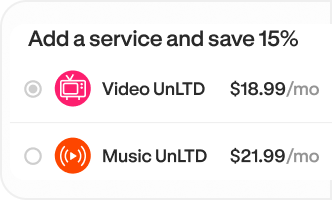
With an add-on, each customer makes a purchase decision. In an arrangement like the UK network’s, the charge goes on their phone bill. Results depend on whether customers see the offer and consider it worth the price.
That difference changes what you count. For an included offer, the number to watch is how many eligible customers claim it. For an add-on, three numbers need keeping apart: customers eligible to buy it, customers the partner reports as reached by the offer, and customers who bought it.
The middle number needs defining with the partner, because partners measure reach in different ways. A banner served in an app doesn’t show that a customer noticed it, and impressions count how many times a placement was displayed, while a reach figure counts people. Purchases set against impressions therefore measure something different from purchases set against customers reached. Agreeing on one definition with each partner also lets you compare partners on the same basis, as our guide to using data to manage bundling partnerships shows.
Existing partner programs can sell add-ons at scale. Add-ons sold to a partner’s existing customers can reach large volumes. In 2023, a large US mobile network launched plans that let customers add subscriptions as perks at $10 a month each and change them whenever they liked, its announcement said. By October 2024 it had sold 7 million perks across all the perks on offer.
That count of perks sold matches none of the three numbers above: it can’t tell you how many customers bought them, how they were promoted or how long buyers kept them.
Co-marketing shapes whether customers come across an add-on
Two of those gaps can be closed by the reporting you agree on. The third, promotion, is something you can plan with the partner before launch. An add-on that sits in a partner’s catalog can go unseen, so pin down these details in the agreement:
- where it appears: plan pages, the partner’s app, upgrade journeys, bills or sales conversations (the moment matters too, as our guide to where users find a service explains)
- which eligible customers it will be shown to, and in which markets
- who supplies the creative, and who approves it
- what the partner commits to, such as named placements and a campaign schedule
- how results are reported: eligible customers, customers reached and purchases, by placement where possible, with reach defined
Spelling it out this clearly means you can check after launch whether the partner did what it agreed. A promise of marketing support gives you nothing to check.
Two subscription services can also promote each other
The same questions apply when the partner is another subscription service. When a technology company’s video service and a broadcaster’s streaming service launched a joint bundle in the US in October 2025, each said it would give its users sample episodes of the other’s shows inside its own app. Customers could buy the bundle through either service.
A joint bundle moves the promotion questions onto both sides, with each service deciding where the other appears in its app, who sees it and how results are shared.
Running included and add-on offers creates operational work
Whoever the partner is, promotion is one side of the work. Running both kinds of offer adds another. Including your subscription in some plans and selling it as an add-on on others means two offers, with different eligibility rules, prices, free periods and promotions. These details can change as plans and campaigns change. Across several partners the changes add up.
Boku’s Product Operations team takes on that upkeep, launching and updating bundles, promotions and add-ons across partners. Boku doesn’t control how a partner markets the offer; that’s for your agreement with each partner.
Choose included or add-on offers partner by partner
Each partner can take a different route, so base the choice on revenue, what you count and where the work goes.
An included offer earns through the agreement, and its measure is claims among eligible customers. An add-on earns when each customer buys, its measures are eligible, reached and bought, and more of the work goes into promotion.
Ultimately, the choice turns on what each partner will commit to. An included offer can generate revenue through the partner without each customer making a separate purchase, and whether that revenue depends on how many customers claim it comes down to the agreement. An add-on depends on customers finding it and judging it worth the price, and placement shapes the first of those, so take that route with a partner that will commit to named placements and report on them.
Whichever you choose, write the promotion plan into the agreement: where, to whom, when and how it’s reported.
FAQs
What is cross-selling through bundling partnerships?
It’s when a partner, such as a mobile network, sells your subscription to its own customers as an optional extra they choose to buy, for example an add-on charged to their phone bill. It differs from an included bundle, where the subscription comes with a plan. Because each customer decides, results depend on how the partner presents and promotes the offer.
What cross selling strategies work through bundling partners?
A partner can sell your subscription as a paid add-on on its bill, offer it with a free period that then becomes a paid add-on, or promote a joint bundle with another subscription service. In 2023, a large US mobile network launched plans with $10-a-month subscription perks, and a UK mobile network’s help pages describe a free-period add-on. Each needs promotion and reporting agreed with the partner.
What is co-marketing in a bundling partnership?
Co-marketing is the promotion a subscription business and its partner plan together: where the offer appears in the partner’s channels, which customers see it, who supplies the creative and what campaigns run. In a bundling partnership, it’s worth agreeing on these in specific terms before launch, so both sides can check afterward what happened.
Is an add-on better than an included subscription?
They do different jobs. An included subscription makes customers on a plan eligible, with revenue coming through the agreement with the partner, though customers may still need to claim it. An add-on earns when each customer buys it, so its results depend on whether customers see it and judge it worth the price. The right choice can differ from one partner to the next.
How do you measure take-up of a cross-sell offer?
Keep three numbers apart: customers eligible to buy the add-on, customers the partner reports as reached by it and customers who bought it. Agree on how reach is measured, because impressions and customers reached are different measures. Reach against eligible shows how far the offer went; purchases against reach show how it performed.
Key takeaways
- Cross-selling through bundling partnerships means a partner sells your subscription to its customers as an optional paid extra.
- An included offer makes customers eligible, while an add-on asks each customer to buy, so its results depend on whether customers see it and judge it worth the price.
- Keep three numbers apart: customers eligible, customers reached by the offer and customers who bought, with reach defined.
- Agree on the promotion plan in specific terms before launch: placements, audience, creative, schedule and reporting.